
Short answer: key person risk is the chance that losing one person would seriously hurt your business, because they hold knowledge, relationships or decisions nobody else can pick up. When a senior leader resigns, use their notice period to capture what they know, decide within a week who holds the seat while you recruit, and tell customers and the team before rumours do. Then fix the dependency, so the next departure is an inconvenience rather than a crisis.
Most writing on key person risk comes from insurers and accountants, so it’s about insurance policies and business valuations. Those matter, but they don’t help much on the Monday after your head of sales resigns. This is the operating side: what to do in the first 90 days, and how to make the business less dependent on any one person.
I offer interim executive cover, so I’ve seen this problem from the inside. I’ve stepped in as acting head of digital for a global health and wellness brand, and the first weeks of any interim role are spent working out what the previous leader carried in their head.
What is key person risk?
A key person is someone whose departure would cost you real money while you replace them. The ATO’s long-standing test, set out in a 1987 ruling on key man insurance arrangements, puts it well: a key person is an employee whose loss “would result in a significant loss of profits” while a replacement is trained (ATO, IT 2434).
In a mid-market business that’s rarely only the founder. It’s often:
- The head of sales who holds the five biggest customer relationships personally
- The operations lead who is the only one who knows how the month-end, the supplier contracts or the warehouse system really work
- The finance manager who built the spreadsheets the board pack depends on
- The technical lead who has the only admin access to the systems everything runs on
People leave all the time. In the year to February 2026, 1.0 million Australians changed employer or business, a job mobility rate of 7.2% (ABS, Job Mobility, February 2026). The question isn’t whether a senior person will leave. It’s whether the business will notice for weeks or for months.
How do you know if you have key person risk?
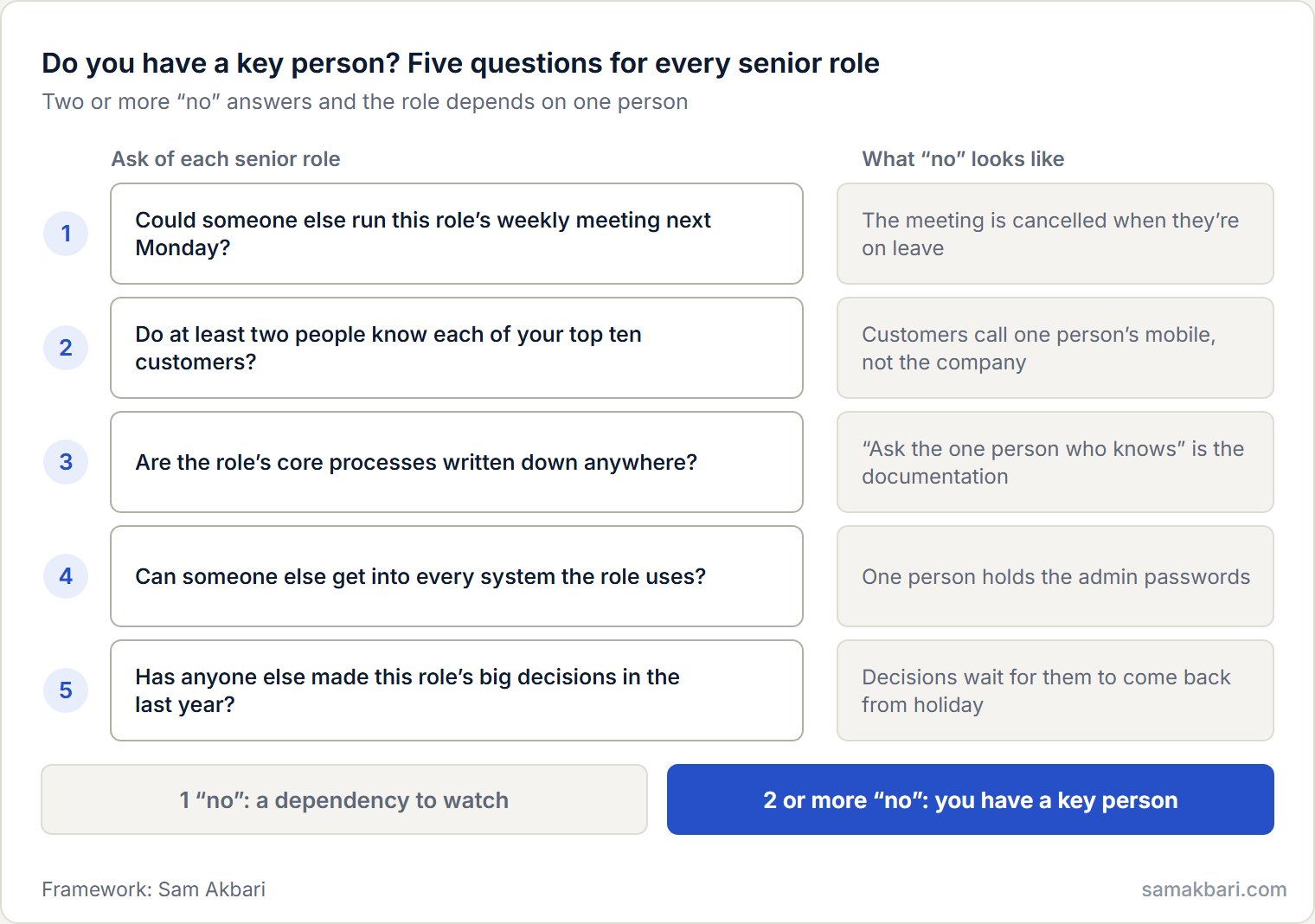
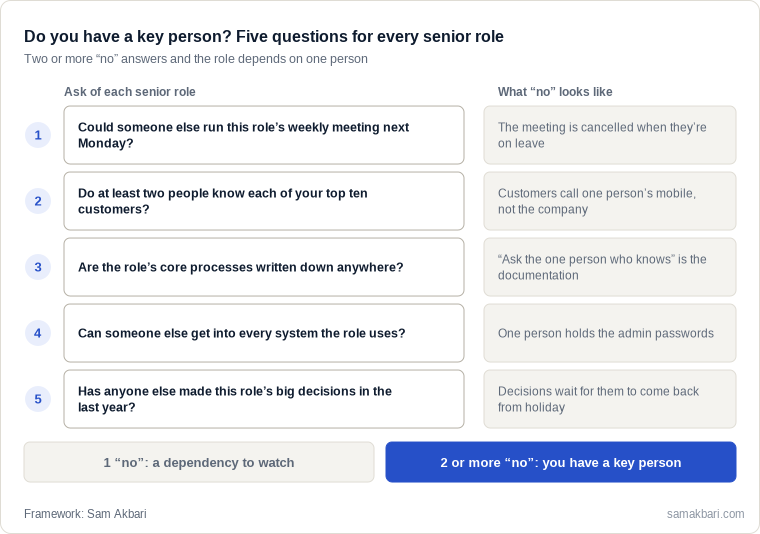
Ask five questions of every senior role. If the answer to two or more is “no”, you have a key person.
| Question | What “no” looks like |
|---|---|
| Could someone else run this role’s weekly meeting next Monday? | The meeting is cancelled when they’re on leave |
| Do at least two people know each of your top ten customers? | Customers call one person’s mobile, not the company |
| Are the role’s core processes written down anywhere? | “Ask the one person who knows” is the documentation |
| Can someone else get into every system the role uses? | One person holds the admin passwords |
| Has anyone else made this role’s big decisions in the last year? | Decisions wait for them to come back from holiday |
The pattern behind all five is the same: knowledge, relationships and decisions that live in one person rather than in the business.
What to do in the first week after a senior leader resigns
The first week sets the tone, and it’s when most of the avoidable damage happens. In order:
- Read the contract the same day. The notice period, any restraint and confidentiality clauses, and what happens to their equity or bonus. The notice period is your handover timetable.
- Decide whether they stay or go on garden leave. If they’re joining a competitor, or hold sensitive pricing and customer data, garden leave may be safer. Otherwise keep them working: their notice period is the best handover time you’ll get.
- Agree a written handover plan with them. What they own, who it passes to, and by when. Put it in writing and review it weekly.
- Secure the access. List every system, account and supplier portal the role uses, and make sure someone else can get in before their last day.
- Tell the team and the key customers. In that order, within days, with a named contact for each customer. Silence lets competitors and rumours fill the gap.
- Decide who holds the seat. More on the options below. Make the call within a week, even if it’s temporary.
How much notice will you get?
It depends on the contract. For comparison, under the National Employment Standards the minimum notice an employer must give when it ends someone’s employment runs from one to four weeks depending on service, plus a week for employees over 45 with at least two years’ service (Fair Work Ombudsman). When an employee resigns, the notice they owe you comes from their award, enterprise agreement or employment contract (Fair Work Ombudsman). An employee who isn’t covered by an award or agreement doesn’t have to give any notice unless their employment contract requires it; if the contract says nothing about notice, they might need to give reasonable notice (Fair Work Ombudsman). So for a senior leader, read the contract: it can set a much longer period than any minimum.
You may also be able to end the notice period early: the award, agreement or contract may say how, or you can agree it with them or end the employment yourself (Fair Work Ombudsman). That’s the right call sometimes, but count what you lose: weeks of handover from the one person who knows how the role works. This is general information, not legal advice; check the specific contract with your lawyer.
The 30/60/90-day plan
Once the first week is done, the job is to keep the business steady, capture what the departing leader knew, and hire well rather than fast.
| Period | Priorities | You’ll know it’s working when |
|---|---|---|
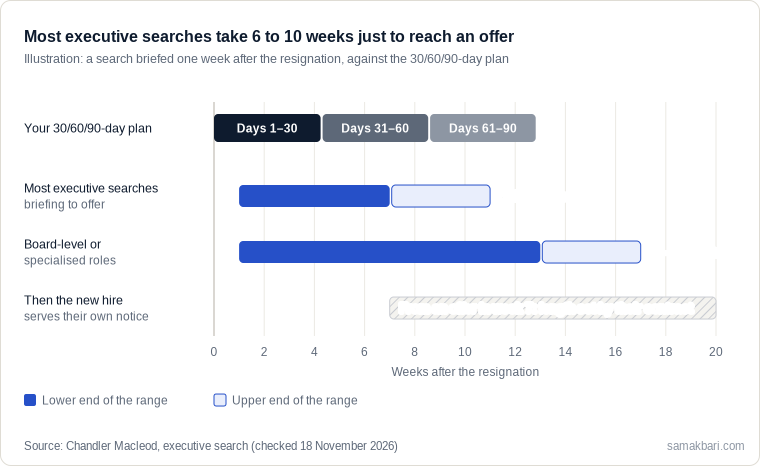
| Days 1–30 | Handover plan running, access secured, customers and team told, cover in the seat, recruitment brief written | No customer or supplier has been surprised, and the role’s weekly meetings still happen |
| Days 31–60 | The person covering is making the role’s decisions, not holding them. Undocumented processes written down. Search under way | Decisions aren’t queuing for the CEO, and there’s a shortlist |
| Days 61–90 | Offer made (or a shortlist, for board-level roles), start date and onboarding planned, the cover’s handover to the new hire planned in writing | The new leader starts with a written picture of the role, not a blank page |
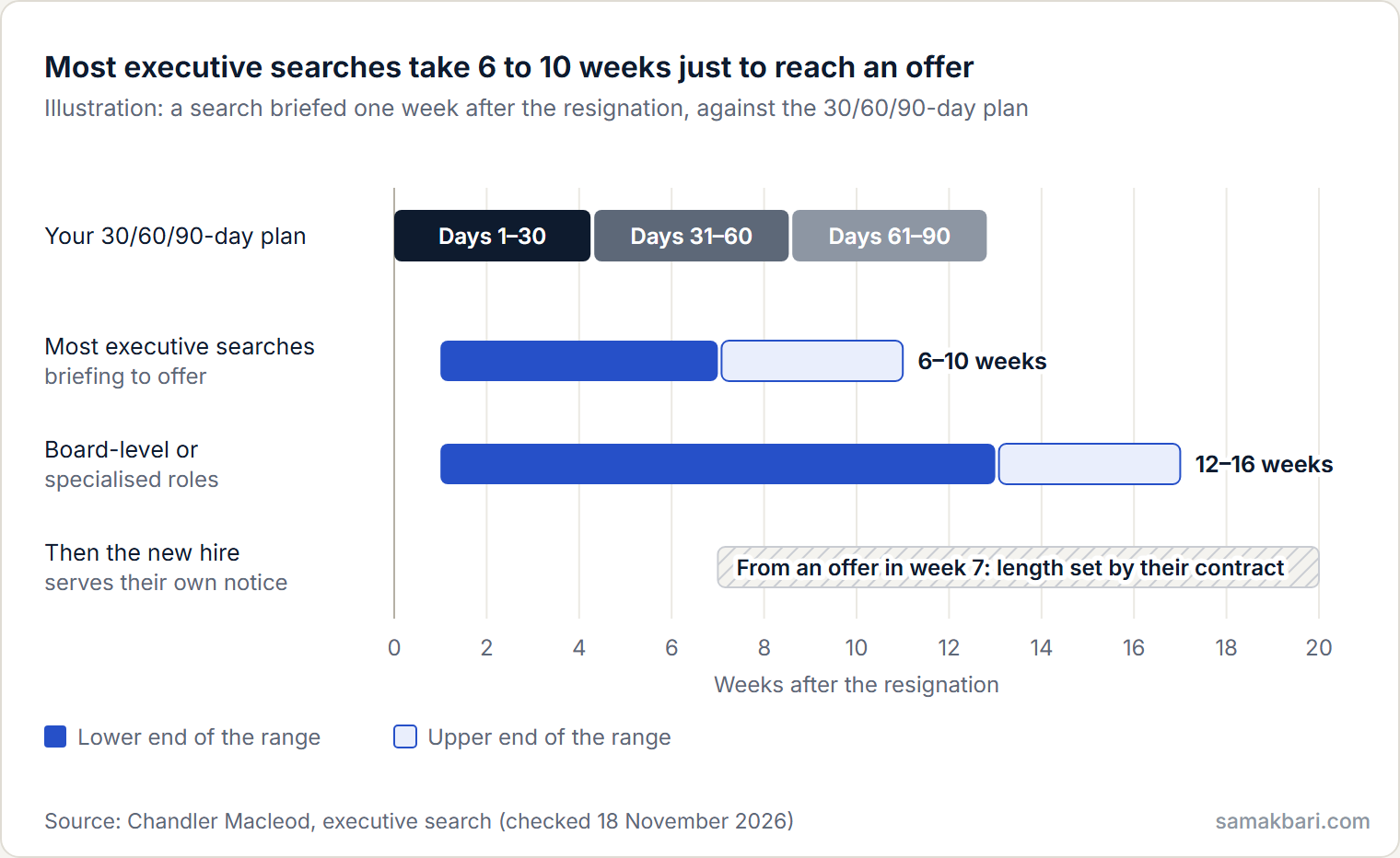
The timeline is realistic rather than cautious. One Australian recruiter’s own estimate is that most executive searches take 6 to 10 weeks from briefing to offer, and 12 to 16 weeks for board-level or specialised roles (Chandler Macleod). Then your new hire has to serve their own notice, so the seat stays empty for longer than the search itself. I’ve set out what that gap costs in what it really costs to hire an executive in Australia.
Who should hold the seat while you recruit?
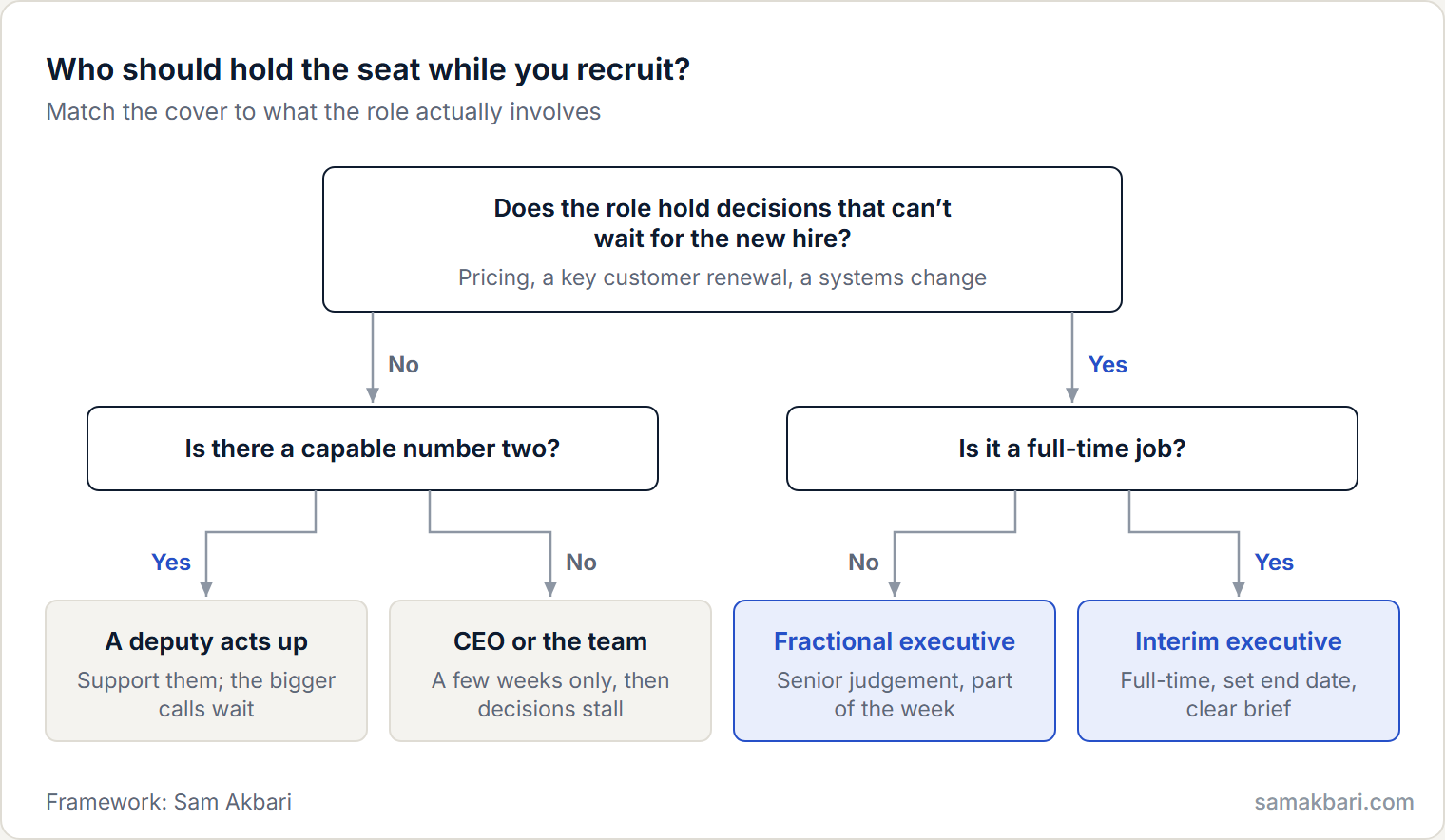
This is the decision that matters most, and it depends on what the role actually involves.
| Option | When it works | The risk |
|---|---|---|
| A deputy acts up | The role is mostly running what already exists, and there’s a capable number two | They’re doing two jobs, and the bigger decisions wait for the new hire |
| The CEO carries it | For a few weeks, in a role the CEO knows well | The CEO’s own job stops, and a few weeks become a few months |
| Split across the leadership team | Short gaps, in a role with clear separate parts | Nobody owns the whole, so the cross-team decisions stall |
| An interim executive | The role has decisions nobody else can make, or the business is in a critical period (a raise, a sale, a restructure) | Cost per month, and they need a clear brief and end date |
| A fractional executive | The role needs senior judgement but not five days a week, or you’re not sure you need a permanent hire at all | Not enough time if the role really is full-time |
My rule of thumb: if the role is mostly execution, let a deputy act up and support them. If it involves decisions that can’t wait until the new hire starts, such as pricing, a key customer renewal or a systems change, put a senior person in the seat.
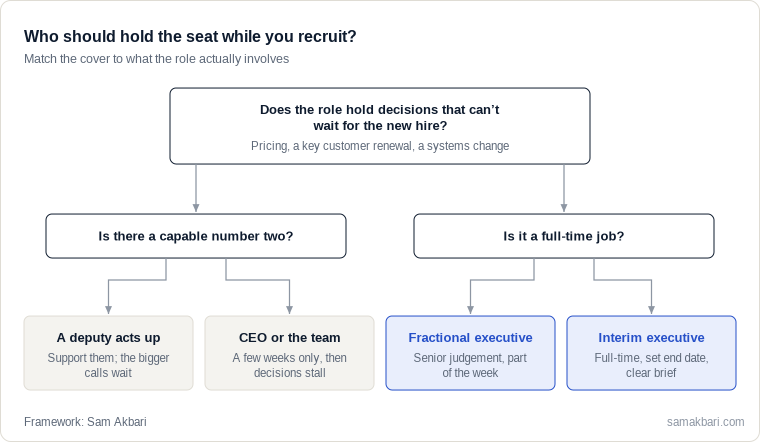
That’s what interim executives are for: full-time cover for a set period, with the authority to make the calls, and a proper handover to the permanent hire. I’ve written more on the difference between fractional and interim and on what the first 90 days of a fractional executive should deliver.
A departure is also a good moment to ask whether you need a like-for-like replacement at all. Sometimes the role was built around the person who’s leaving, and the business now needs something different.
Does key person insurance cover this?
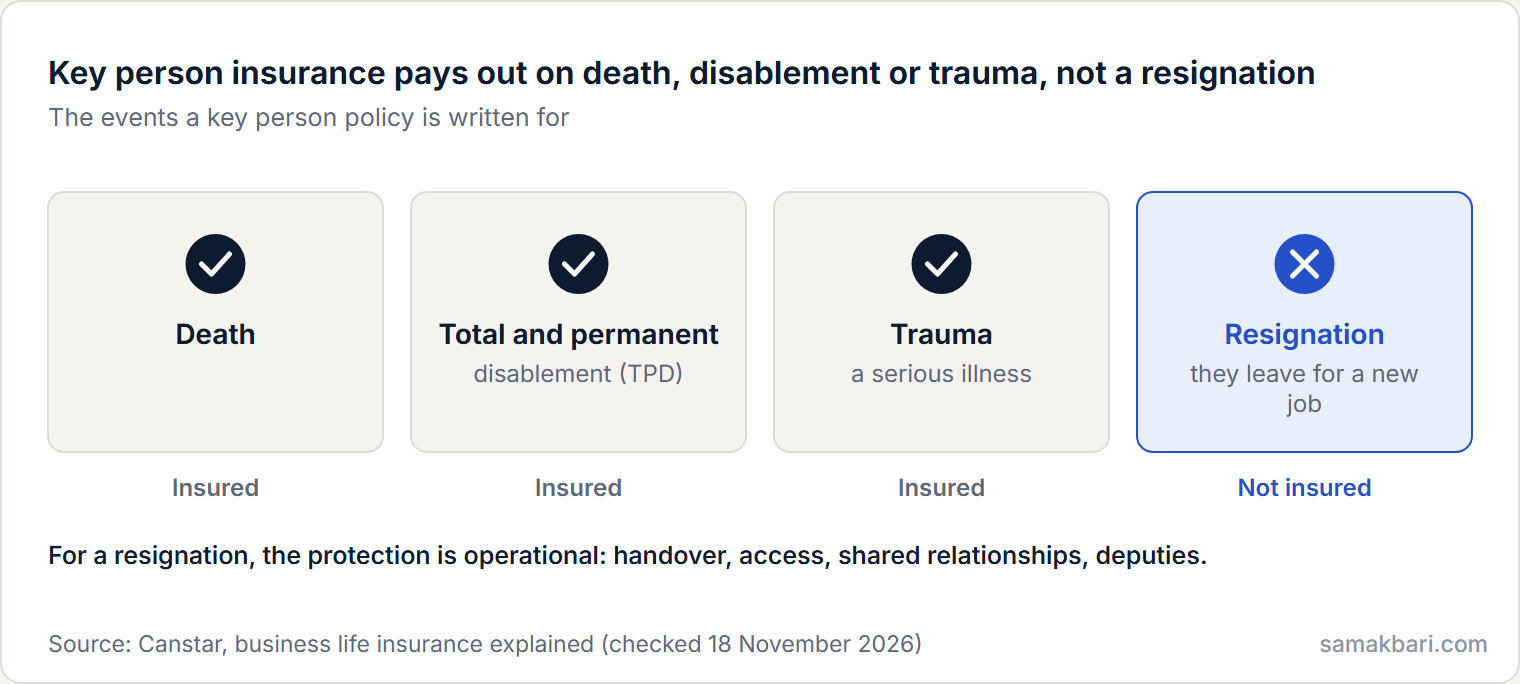
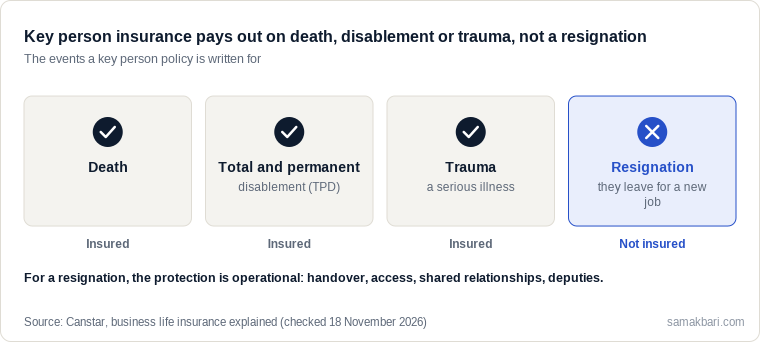
Usually not, if the person resigns. Key person insurance is designed to pay out on death, total and permanent disablement or trauma, a serious illness (Canstar). It can protect the business against the worst case, and it’s worth having for owners and a few critical people. But a resignation isn’t an insured event.
The tax treatment depends on why you hold the cover. The ATO’s long-standing position is that premiums for term or accident cover are deductible, and payouts assessable, where the purpose of the insurance is to protect against a loss of revenue (ATO, IT 2434). Premiums for life and endowment policies are generally treated as capital and aren’t deductible (same ruling), and key person cover can be held for either purpose: to replace lost revenue, or to pay off existing debt (Canstar). This is general information, not tax advice. Check your own policy with your accountant or financial adviser.
So treat insurance as one part of the answer. The rest is operational.
How to reduce key person risk before anyone leaves
The cheapest time to fix key person risk is before the resignation letter. Five things make most of the difference:
- Write down what lives in people’s heads. Not a 200-page manual: the ten processes that would break first. In a global launch program I ran, every launch meant coordinating eight teams, four regions and fourteen agencies, and the know-how lived in people’s heads. Documenting the sequence and turning it into one intake form that triggers 450 tasks meant launches no longer depended on who was in the room.
- Share the key relationships. Every top customer and critical supplier should know at least two people in your business, and meet them.
- Name a deputy for every critical decision. Then let them make some of those decisions while the leader is still there.
- Remove single points of access. Admin rights, bank authorities and supplier logins should never sit with one person.
- Run the business on a rhythm, not on heroes. A weekly operating rhythm with written actions and numbers means the next person can pick it up. It’s a large part of what a COO actually does.
Boards should ask about this once a year, role by role: who are our key people, what happens if each one leaves, and what have we done about it since last year?
The bottom line
Senior people will leave, and a resignation isn’t something insurance covers. When it happens, use the notice period for a written handover, secure access, tell customers and the team quickly, and put someone in the seat within a week who can make the role’s decisions. Then fix the dependency, so it doesn’t happen the same way twice.
If a senior leader has just resigned, or you can see one person your business couldn’t run without, read how I work as an interim executive or fractional COO, or book a 30-minute call and we’ll work out what cover the role needs.
Common questions
What is key person risk?
Key person risk is the chance that losing one person would seriously hurt the business, because they hold knowledge, relationships or decisions nobody else can pick up quickly. The ATO's long-standing test for a key person is someone whose loss would cause a significant loss of profits while a replacement is found and trained. In a mid-market business it's often a head of sales, operations or finance, not only the founder.
How do you mitigate key person risk?
Write down what only that person knows, share the key customer and supplier relationships, give every critical decision a named deputy, and make sure system access and passwords don't sit with one person. Then test it with one question per role. If this person resigned tomorrow, who would run it on Monday? Insurance helps with death, disablement or serious illness, but it doesn't cover a resignation.
How much notice does a senior employee have to give in Australia?
It depends on their award, enterprise agreement or employment contract, not on a single legal minimum. An employee who isn't covered by an award or agreement doesn't have to give notice unless their contract requires it, though with no notice term they might need to give reasonable notice, so for a senior leader the contract is the place to start. Check the contract on the day they resign, because it sets your timetable. This is general information, not legal advice.
Should I put a departing senior leader on garden leave?
Do it when the risk of them staying in the business outweighs the value of their handover, for example when they're joining a competitor or have access to sensitive pricing and customer data. Otherwise, keep them working on a written handover plan for as much of the notice period as you can. Their notice period is usually the best handover time you'll get, and garden leave gives it away.
Who should cover a senior role while you recruit?
Pick the option that matches the gap. A capable deputy can act up if the role is mostly running what already exists. If the role has decisions nobody else can make, or the business is in a critical period, an interim executive can hold the seat full-time. Avoid splitting the role across the CEO and peers for more than a few weeks, because the decisions start to wait.
Does key person insurance cover a resignation?
Generally no. Key person policies are designed to pay out on death, total and permanent disablement or trauma (a serious illness), so a resignation isn't covered. The tax treatment of premiums also depends on the purpose of the cover, so check it with your accountant or adviser.