What it is
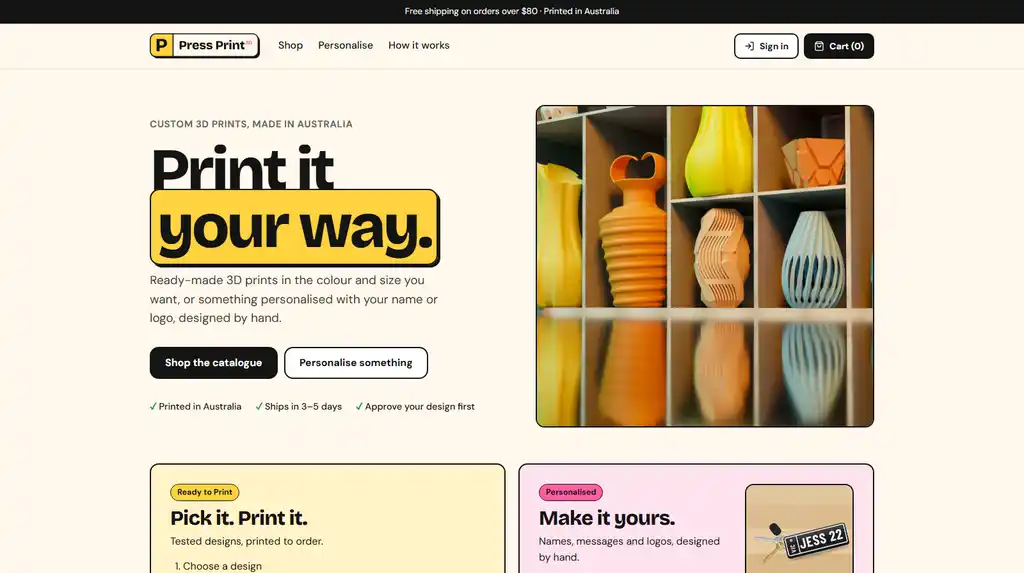
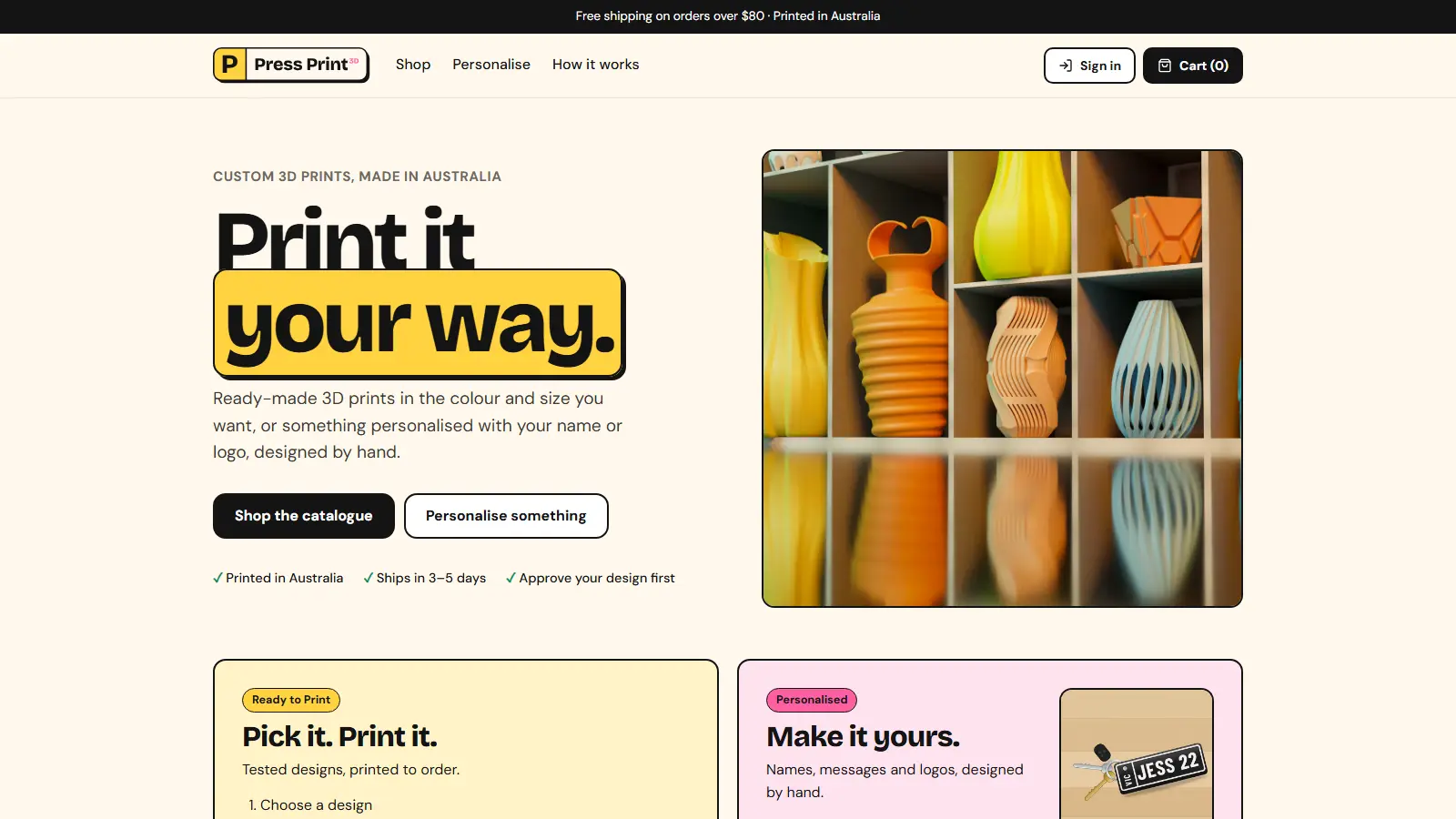
Press Print 3D is a small 3D printing business in Victoria with its own shop at pressprint3d.com.au. It sells three things:
- Ready to Print: tested designs. Pick a size, material and colour, and it ships from the shelf or is printed to order.
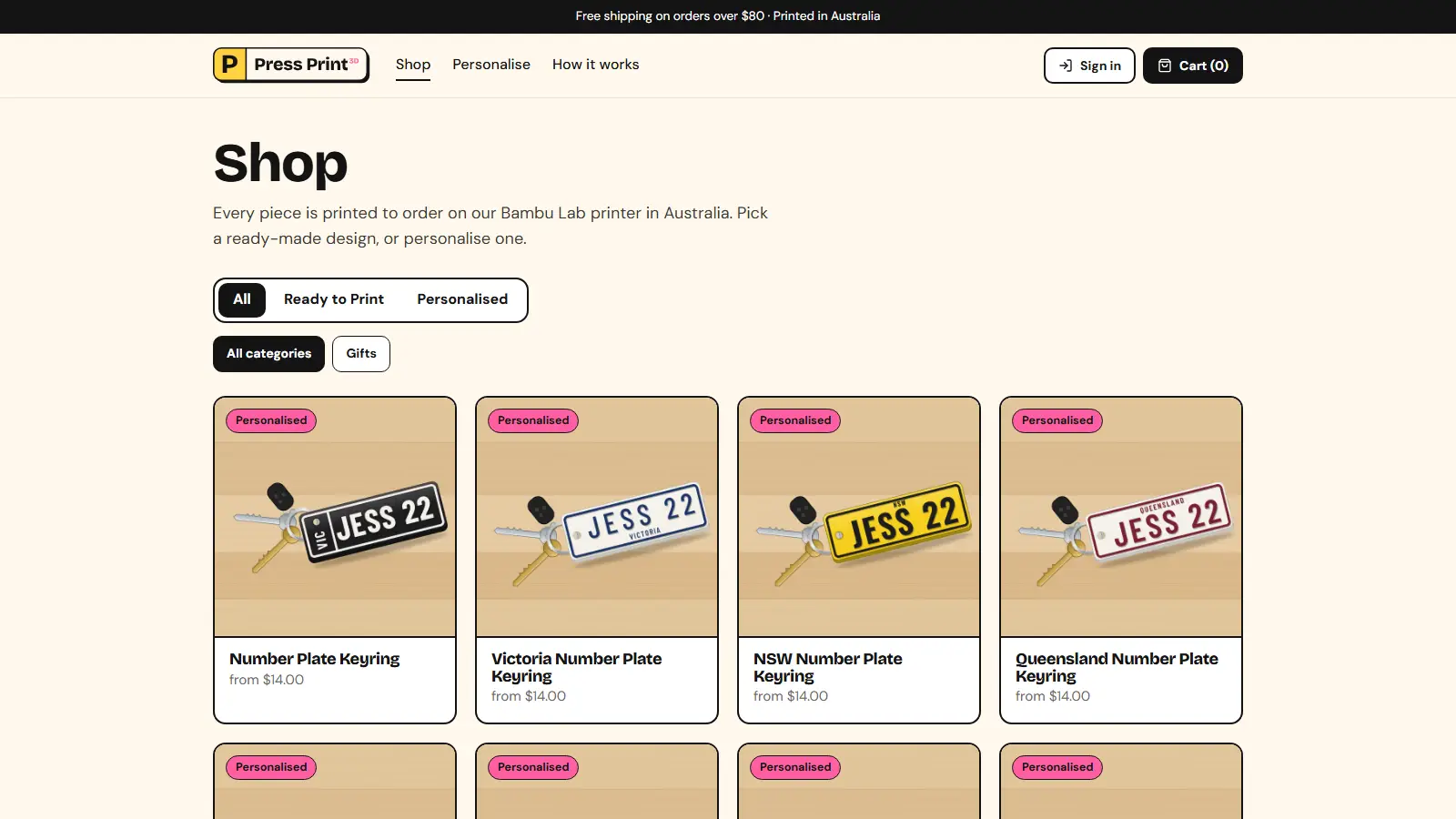
- Personalised: designed by hand from the customer’s brief, such as a name, a logo or a number plate keyring.
- Digital files: the STL, for people who have their own printer.
The gap
If you want a personalised 3D-printed gift in Australia, you usually get a text box on a marketplace listing, or a slow email exchange with a screenshot at best. Either way you don’t see the object until it arrives.
Here the customer pays when they send the brief, then reviews a 3D preview in their account. They can rotate it, zoom in and check the colours, then approve it or ask for changes. Nothing is printed until they approve.
What I built
The shop
- Availability that follows the filament on hand: a colour is offered only while there’s enough in stock to print the order, and it comes back on its own when restocked.
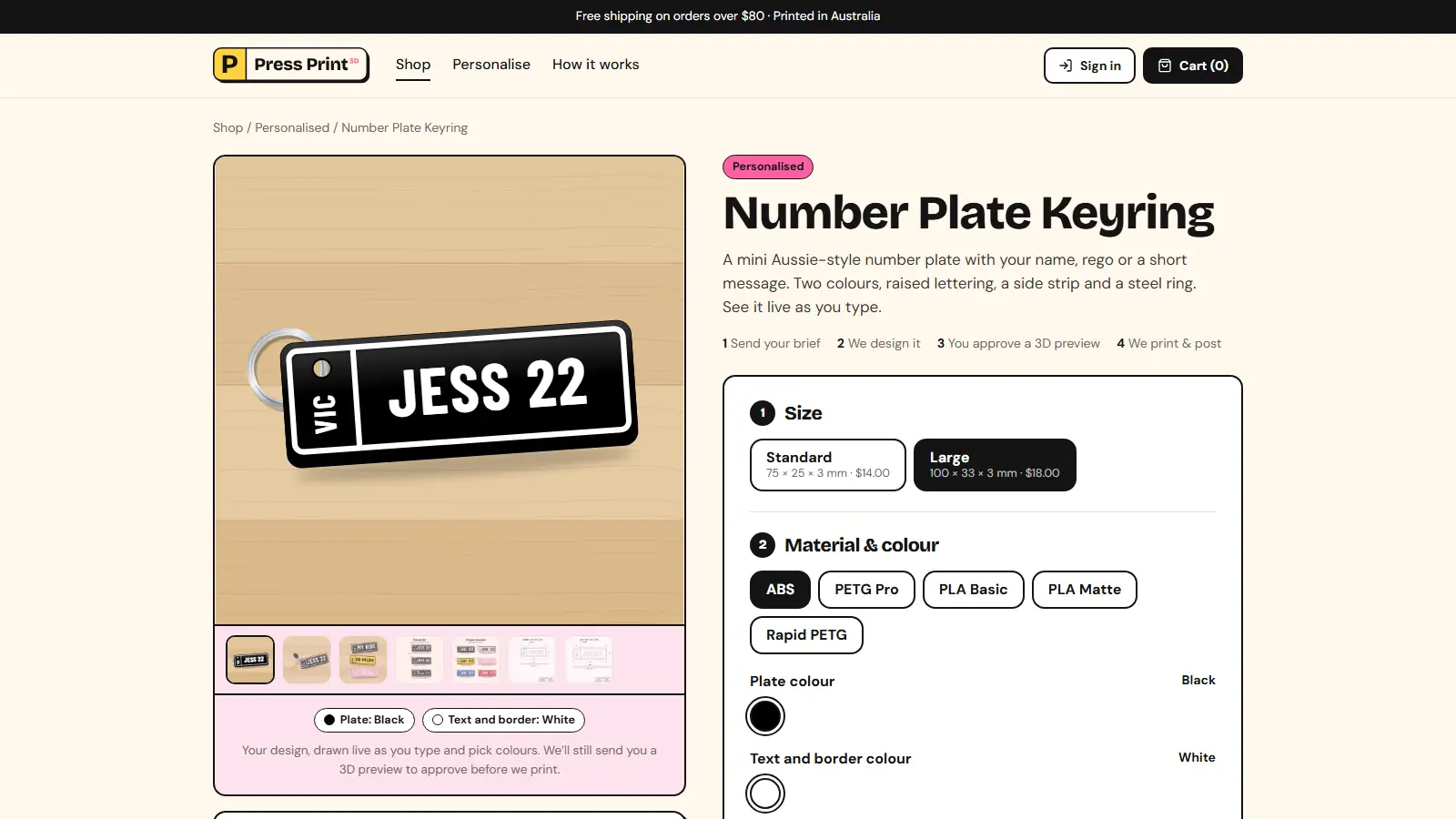
- A live preview that draws a number plate keyring as the customer types, across 16 plate styles.
- Accounts with orders and tracking, design requests with version history and messages, and downloads.
The back-office
- One print queue for every job: shop orders, approved personalised work and print-for-stock runs.
- Spool inventory with barcode scanning (USB scanner or phone camera), and a catalogue of more than 600 filament colours.
- Printers and filament slots, orders, design requests, enquiries, 20 editable email templates and a blog.
How it’s built
There’s no Shopify, WordPress or CMS. It’s a custom Next.js app running on Cloudflare (Workers, D1 database and R2 file storage), with Stripe for payments and SendGrid for email, so the code, design and data all stay with the business. Payments, approvals and stock movements are written so that a double-click or a retried webhook can’t apply anything twice.
What’s next
Online payments switch on at launch. After that comes a bridge to the printer, so a queued job can be sent from the back-office and its progress flows back into the queue without anyone re-entering it.
Why it matters for your business
I built this the way I run transformation work: find the gap the customer actually feels, design the process end to end, then automate the parts that cost time. It’s also a working example of how fast one person can now ship real software with AI tools. If you’re weighing where AI fits in your business, this is what it looks like in practice.